Solutions for a sustainable agriculture industry
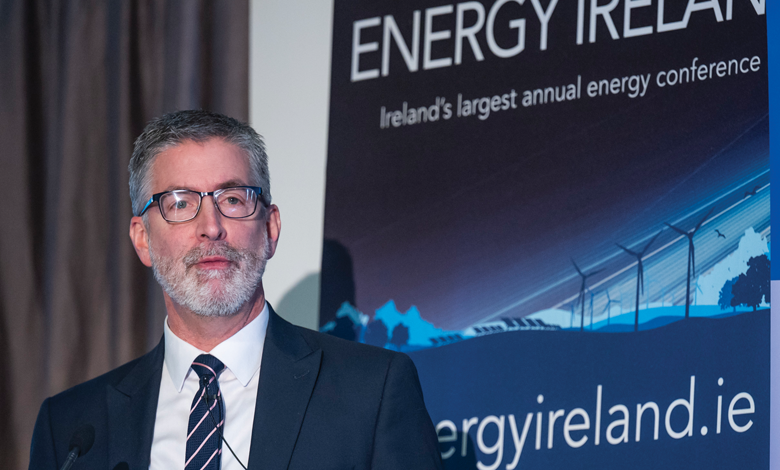
Green Growth Deputy Director at the North’s Department of Agriculture, Environment and Rural Affairs, Jonathan McFerran, talks about the steps the Northern Ireland agriculture industry is taking to safeguard its future while meeting climate targets.
McFerran asserts that, similar to the Republic of Ireland, the agriculture industry is the “bedrock” of the Northern Ireland economy, saying: “We punch above our weight in terms of agriculture in Northern Ireland.”
Illustrating this, he says Northern Ireland produces enough protein to feed 10 million consumers despite its total population of 1.9 million, adding that the agri-food sector employs 113,000 people. However, he indicates that this level of agricultural activity has “a negative impact on the environment”.
McFerran says Northern Ireland produces 10 million tonnes of slurry, and 6,000 tonnes of phosphorus every year. He explains that this poses risk to waterways and the environment, demonstrated by the findings of the Lough Neagh Report published in July 2024. McFerran says: “62 per cent of the problem in Lough Neagh is caused by agriculture.”
Generational change
Two approaches to tackling the problem have been identified, the first of which is to reduce livestock numbers to produce less waste. However, McFerran insists: “If you reduce the agriculture industry, it would be horrendous for Northern Ireland.”
Therefore, the agriculture industry needs to become sustainable and McFerran says this will require “a generational change”, adding: “I believe the agriculture industry is up for it.”
Creating a sustainable agriculture industry is one of the priorities set out by the Department of Agriculture, Environment and Rural Affairs (DAERA), along with decarbonisation, and net zero targets. McFerran claims that biomethane is the answer to achieving these priorities, but points out that the Northern Ireland Executive does not have a biomethane strategy.
He underlines the importance of this strategy as companies put pressure on the Executive to replace fossil fuel gas with biomethane so they can comply with sustainability standards. Biomethane will also be essential for Northern Ireland to meet climate goals under the Climate Change Act, which McFerran says are “incredibly difficult for Northern Ireland to achieve”. McFerran also points out that the Department for the Economy (DfE) is responsible for producing a biomethane strategy.
However, DAERA recently published its Green Growth Strategy which sets out a long-term vision for climate action and commitment to net zero targets. McFerran outlines its mission to reduce emissions and create green jobs in a “strong circular economy”.
For agriculture development of anaerobic digestion (AD), biomethane production, and the management of excess nutrients will be central to this. Regulation will also be key, as highlighted in the Lough Neagh report which identifies education, investment, regulation, and enforcement as the drivers for a sustainable agriculture industry.
Actions
In 2023, DAERA launched the Small Business Research Initiative competition under the Sustainable Utilisation of Livestock Slurry Project to find solutions to nutrient separation from slurry and digestate. Under phase one, six companies were awarded £100,000 each to investigate proof of concept models with this aim.
In phase two, £12 million of Executive funds will be awarded to three of these companies progress their concept. Two companies have already been awarded the contract, the first of which County Down-based firm, Blakiston Houston Estate Ltd for their project, Farm2 Export.
McFerran explains that the project reduces excess phosphorous in slurry by separating it into liquid and solids using a mobile separator. Liquid slurry created in this process produces less emissions and adheres to crops more effectively than untreated slurry.
Solids derived from the process are used to produce feedstock, which is then converted to digestate, but McFerran explains that this digestate cannot be spread on fields. A biofertiliser plant is needed to convert digestate to exportable firms, but no such plant currently exists in Northern Ireland.
Under the second project, a conglomerate of companies in Mid Ulster aim to construct a 10 MW biorefinery to produce biomethane to be injected directly into the grid. McFerran says they will also produce biochar to be used in cement making in order to capture phosphorous in concrete products, so it can be locked away. He indicates the importance of this, explaining that Mid Ulster is where many of Northern Ireland’s water quality problems arise.
“This will help develop our circular bio economy while reducing nutrients in Lough Neagh and other catchment areas. Improving our water quality in our rivers, loughs, and lakes,” he claims.
Producing a biomethane strategy will be key to building on the Sustainable Utilisation of Livestock Slurry Project. This will require collaboration between DfE and DAERA, with support from the Executive. McFerran claims: “It will improve our water quality, it will improve our nutrient management, and it will provide a sustainable agriculture sector.”
He adds: “I want to see this thrive for Northern Ireland, for the agriculture community, and for the good of the environment. The opportunity is there, we just need to grasp it.”